
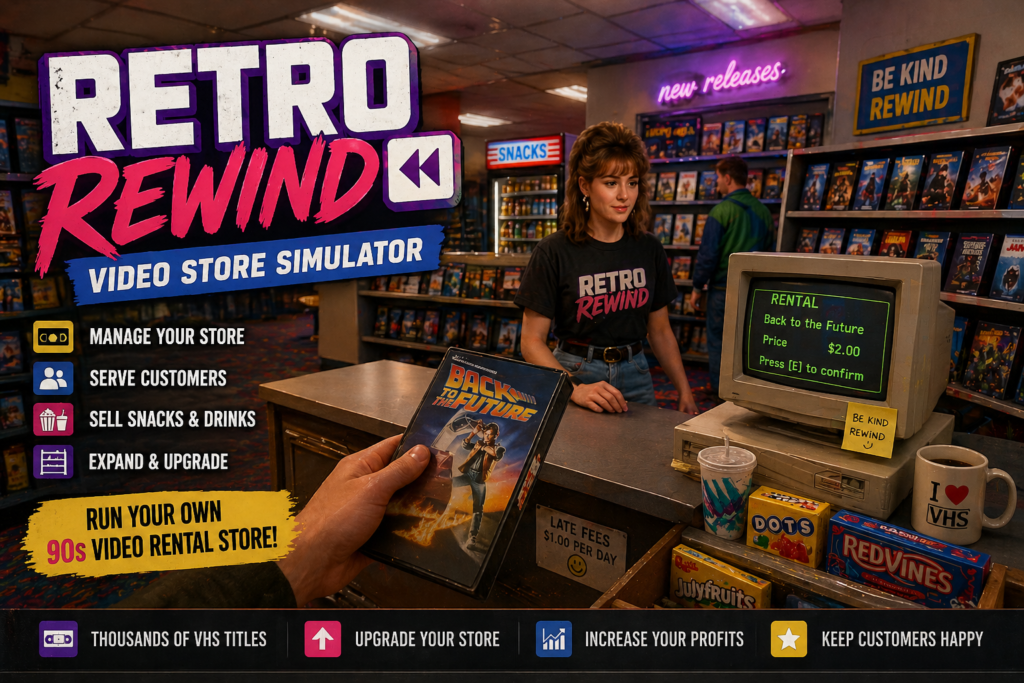
When I first started playing Retro Rewind, what immediately stood out was how focused it is on recreating the experience of running a classic video rental store. This isn’t just a themed simulator—it’s built around managing inventory, serving customers, and maintaining a functional business in a setting that feels pulled straight from the VHS era.
At its core, Retro Rewind is a retail management simulation game where I take control of a video rental shop. My main responsibility is to keep the business running efficiently while growing it over time. That includes organizing shelves, tracking inventory, and making sure customers can quickly find what they’re looking for.
One of the key gameplay systems revolves around inventory management. I’m constantly handling VHS tapes, deciding what to stock, and making sure popular titles are available. Running out of in-demand movies or failing to organize the store properly can slow things down and impact how smoothly customers move through the shop.
Another major part of the game is customer interaction. Visitors come in looking to rent movies, and it’s up to me to keep things flowing. The faster and more efficiently I serve them, the better the overall experience and the more successful the store becomes. It’s a simple system on the surface, but it rewards consistency and attention to detail.
As I progressed, I noticed that store organization plays a bigger role than I expected. Keeping everything in order isn’t just for appearance—it directly affects how quickly I can serve customers. A well-organized layout helps avoid bottlenecks and keeps the gameplay loop smooth.
The game also includes additional retail elements, like selling snacks and drinks. While this isn’t the primary focus, it adds another layer to the management side of things and gives me more ways to generate income beyond just movie rentals.
From what I’ve seen, Retro Rewind is gaining popularity on Steam because it taps into a growing demand for simulation games with simple but satisfying gameplay loops. It doesn’t rely on overly complex mechanics—instead, it focuses on doing a few things well and letting players improve over time.
If you’re searching for a video store simulator, a retro management game, or a nostalgia-driven indie simulation on Steam, this is exactly the kind of experience you’re likely looking for.
To get the most out of the game, I picked up a few practical tips that genuinely made a difference while playing. Keeping high-demand titles stocked at all times prevents slowdowns in customer flow. Organizing shelves early saves time later and keeps everything efficient as the store grows. Paying attention to how customers move through the space can also help avoid congestion, especially during busier periods. Even small adjustments to layout and stocking habits can improve overall performance.
There are clear strengths and a few limitations. The game excels at delivering a focused and consistent management loop, and the nostalgic theme is a major draw. At the same time, players looking for deeper economic systems or more complex mechanics may find it somewhat limited over longer sessions.
Overall, Retro Rewind succeeds by staying true to its concept. It offers a clean, well-structured simulation experience centered around running a video rental store, managing inventory, and improving efficiency over time. For me, it’s the kind of game that’s easy to jump into and steadily improve at without feeling overwhelmed.
If you’re exploring new indie simulation games on Steam, retro business simulators, or management games with a nostalgic theme, Retro Rewind is definitely worth looking into.